DORNIER at Plastindia 2026: Focus on more performance from existing production lines, expanded on-site service and inline recycling
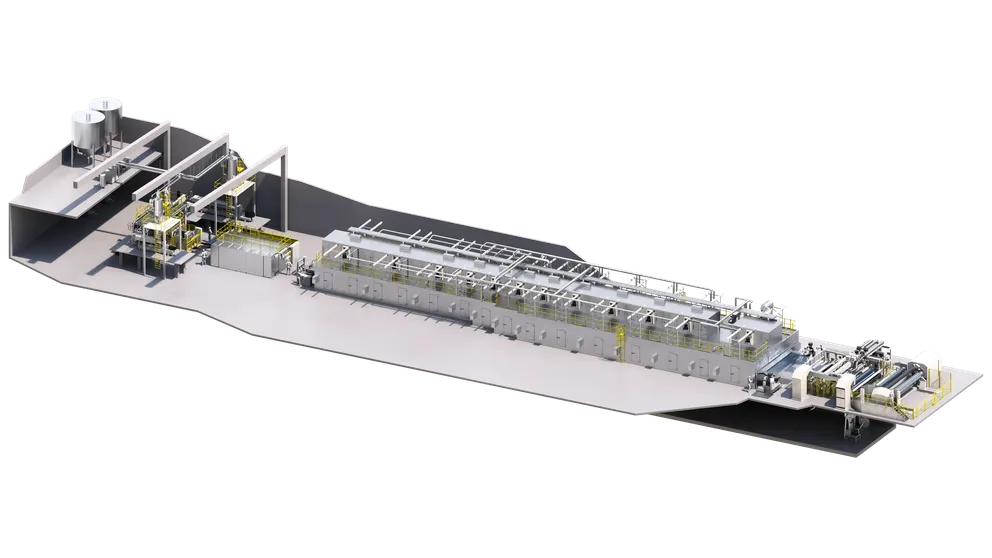
From 5 to 10 February 2026, Lindauer DORNIER will be presenting production line solutions for the Indian film market at Plastindia in New Delhi (Hall H4, Stand H4GM-D21). The focus of the exhibition will be on new systems for BOPP and BOPET production, customized retrofits for existing systems, an expanded range of on-site services, and modern recycling technologies for increased productivity and material efficiency.
Plastindia 2026 will be held under the motto “Bharat Next” (meaning ‘India of the Future’) and underscores India's ambitions as one of the world's most dynamic industrial locations – a market that the machine and plant manufacturer DORNIER has also been closely involved with for decades in the field of film production. “We have many established and experienced film customers in India who manufacture high-quality packaging and technical films for the global market,” says Knut Waldow, who works in sales for the film stretching line product range at DORNIER. “With complete plant solutions for the production of BOPP and BOPET films, tailor-made retrofit concepts, an increased service presence in India and efficient recycling technologies, we want to show at Plastindia how our customers can make their film plants future-proof.”
Retrofit: Getting more performance out of existing lines
DORNIER film stretching lines are designed for a service life of decades. Accordingly, the proportion of existing machines for which retrofits are specifically requested is also high in India. At Plastindia, DORNIER will be presenting proven and new solutions for modernising existing film lines in order to increase their output, energy efficiency and quality. One of the latest developments is the Air Foil Shutter for the TDO area: “As a retrofit solution, it reduces the laminar flow of process air on the film and significantly stabilises the film run,” says Patrick C. Fischer, also part of the DORNIER sales team for film stretching lines. “It also ensures a clear temperature boundary between the zones, thus increasing process stability.”
A perennial favourite among retrofits as a stand-alone system is the band pinning system from DORNIER. The high-voltage system fixes the melt precisely to the casting roll, thus ensuring a significantly more stable production process. “It is a real retrofit classic that is also very popular in India because it is particularly economical,” explains Fischer. He adds: “A major advantage for our customers is that we have the expertise and production of pinning belts completely in-house at DORNIER – we develop and manufacture all belts ourselves and can therefore adapt them optimally to the respective systems and applications.” In close consultation with customers, existing systems – even those that have been in use for over 20 years – are consistently further developed technically.
Expanded service range in India
In order to implement upgrades and service calls for customers in India even faster and more cost-effectively, DORNIER has also expanded its local service and after-sales offering since the last Plastindia. Through its location in Mumbai, the machine and plant manufacturer not only ensures the supply of original spare parts but also offers clip overhauls there. The advantage: local clip overhauls are faster than shipping them to Germany, which significantly reduces downtime. The number of local service teams on site has also been increased compared to the last Plastindia in order to be able and carry out commissioning, technical training and other services even faster in the future.
Sustainability: Inline recycling saves material
Another focus of DORNIER's exhibition stand (Hall H4, Stand H4GM-D21) is technical recycling solutions for greater material efficiency. DORNIER film stretching lines feature inline recycling, whereby film remnants such as edge strips are automatically fed back into the melt without the intermediate step of regranulation. This saves energy and returns up to ten percent of the film material directly back into the production process – without any loss of quality. Existing film lines can also benefit from inline recycling, as the system can be retrofitted to older generations of lines.
Various film applications: from food to technical films
For the family-owned company DORNIER, which celebrated its 75th anniversary last year, India has traditionally been a core market and a driving force for developments in the field of flexible packaging films, especially for food and pharmaceutical products. At the same time, the technical films sector is growing dynamically. “Our Indian customers are very innovative and come to us with their own ideas and optimisation requests: How can the line run even faster and more stably? How can we get more out of our systems? How can we reduce waste and material costs?” says Waldow. “Plastindia stands for “Bharat Next” – and that's exactly what we want to support our customers with: making their systems future-proof.”